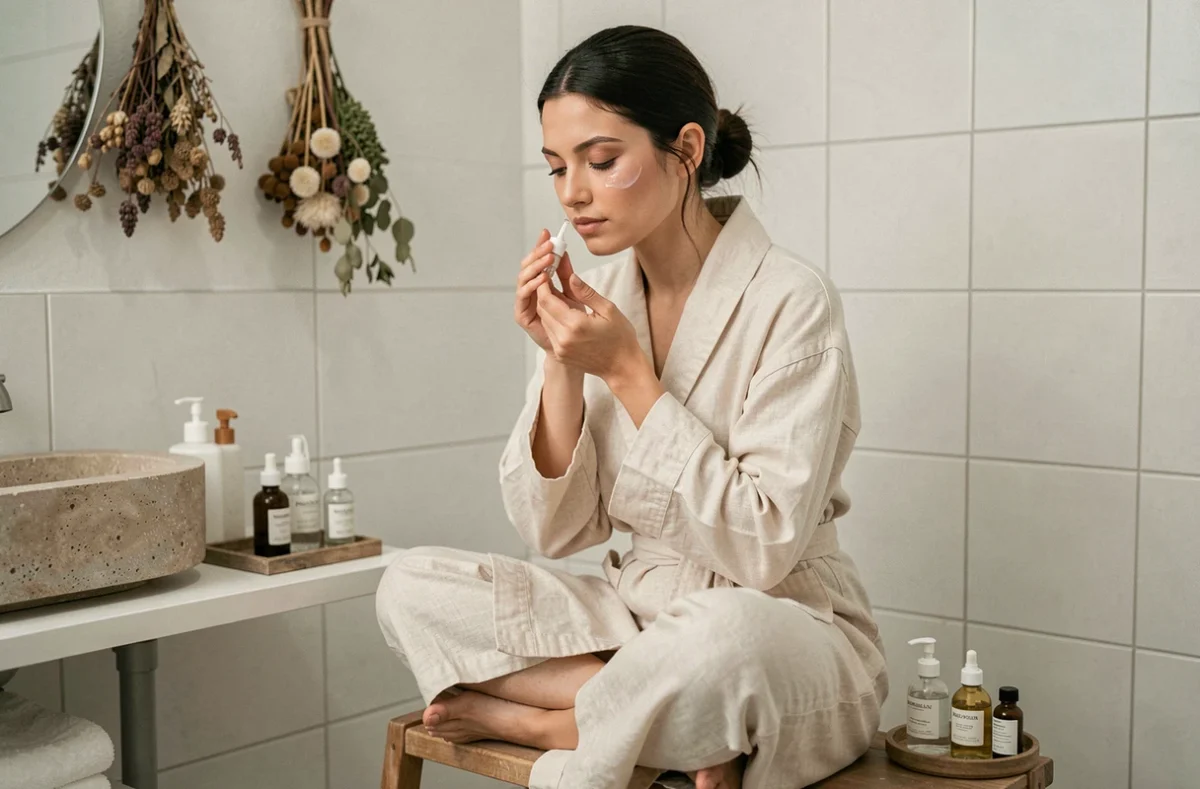
In the pharmacy, a quick glance at the skincare aisle reveals the changes: brands are reformulating, textures are evolving, and certain active ingredients are disappearing from labels. This fall-winter season, beauty and wellness trends are about more than a nail polish color or a standout fragrance.
A deeper shift is underway: routines are getting simpler, the body and scalp are catching up with the face in terms of priorities, and European regulations are beginning to change what shoppers actually find on store shelves.
Scalp and body care: beauty goes beyond the face
Look at Pinterest searches and the trend is clear: full-body care routines are gaining ground over skincare focused solely on the face. The scalp, long treated as little more than a base for hair, is becoming a dedicated area of care, with serums, exfoliants, and masks designed specifically for it.
This shift is changing the way people build their routines. Instead of looking for a miracle product for the face, they want a skincare system that covers the whole body, from head to toe. Brands offering cross-category ranges (face, body, and hair) with complementary active ingredients are tapping into this demand.
To keep up with these changes week by week, Univers Beauté news rounds up the latest launches and product trends throughout the season.
Slow beauty and minimalist routines: fewer products, better results
Layering seven skincare products morning and night is a habit inherited from viral Korean routines. This season, the opposite approach is gaining momentum. Slow beauty, documented by Mintel and WGSN according to The Sacramento Bee, champions fewer products and slower rituals.
In practice, that means going from eight bottles to three or four, choosing concentrated formulas that serve multiple purposes. A hydrating serum that also supports the skin barrier can replace a cream-and-lotion duo. Makeup follows the same logic: skincare-infused foundations and nourishing tinted lip balms are taking the place of layers of primer, concealer, foundation, and powder.
How slow beauty changes your daily routine
- Less time in front of the mirror makes the routine easier to stick with over the long term, especially during the week
- Your budget is reallocated: you buy fewer products, but invest in higher-end versions of the ones you keep
- Your skin is exposed to fewer overlapping chemical ingredients, reducing the risk of reactions caused by incompatible actives
This approach isn’t a step backward. It reflects a more mature market in which formula quality matters more than the number of steps.
European microplastics regulations: what’s changing in your products
A regulatory timeline often flies under consumers’ radar, even though it directly affects the formulas available on store shelves. European Regulation 2023/2055, outlined by Safic-Alcan, introduces phased restrictions on microplastics in cosmetics.
For consumers, the impact is tangible: some beaded exfoliants, glittery textures, and several long-wear makeup formulas must be reformulated. Brands are replacing synthetic particles with biodegradable alternatives (rice powder, cellulose, and natural silica), which can sometimes change the look or feel of a product.
PFAS and cosmetics in France
At the same time, the ban on PFAS in cosmetics came into force in France on January 1, 2026. These per- and polyfluoroalkyl substances, used for their waterproofing and smoothing properties, are gradually disappearing from foundations, mascaras, and sunscreens. Replacement formulas offer similar performance, but wear in humid conditions may vary by brand and product category.
Fall-winter makeup: powdery textures and deep shades
In makeup, the season marks a shift toward matte, velvety finishes. Powdery eye looks reflect a preference for matte textures and muted colors: warm brown, plum, and smoky terracotta. The glossy finishes and shimmery eyeshadows that dominated spring are taking a back seat.
This aesthetic choice is practical, too. Matte finishes hold up better in cold, dry weather, need fewer touch-ups, and layer more easily over skin prepared with a rich moisturizer.
Fragrance: the return of autumn signatures
Fragrance mists, so popular this summer, are giving way to more structured eau de parfums. Woody, amber, and spicy notes dominate this season’s launches. There is also growing interest in so-called “niche” fragrances with less linear compositions, featuring smoky accords or leather facets that stand apart from standard floral-fruity scents.
Systemic beauty: how skincare connects to sleep and nutrition
The season’s most significant trend isn’t about a product, but an approach. Skincare is no longer limited to what we apply to the skin: sleep, nutrition, stress management, and hydration are becoming recognized pillars of a systemic approach to beauty.
On store shelves, this is reflected in the rise of beauty supplements (collagen, drinkable hyaluronic acid, and skin-focused probiotics) and brands that pair topical skincare with a broader wellness routine.
- Collagen supplements are positioned as an extension of serum, not a replacement
- Skin-focused probiotics target the skin barrier from within, addressing an area that creams alone cannot cover
- Sleep is now part of brand recommendations, with evening beauty rituals designed to encourage restful sleep (comforting textures and relaxing fragrances)
This systemic approach blurs the line between beauty and wellness. It explains why brands traditionally focused on facial skincare are expanding into nutrition and body-care rituals. The season ahead confirms that beauty is now viewed as an ecosystem, not a collection of isolated steps.