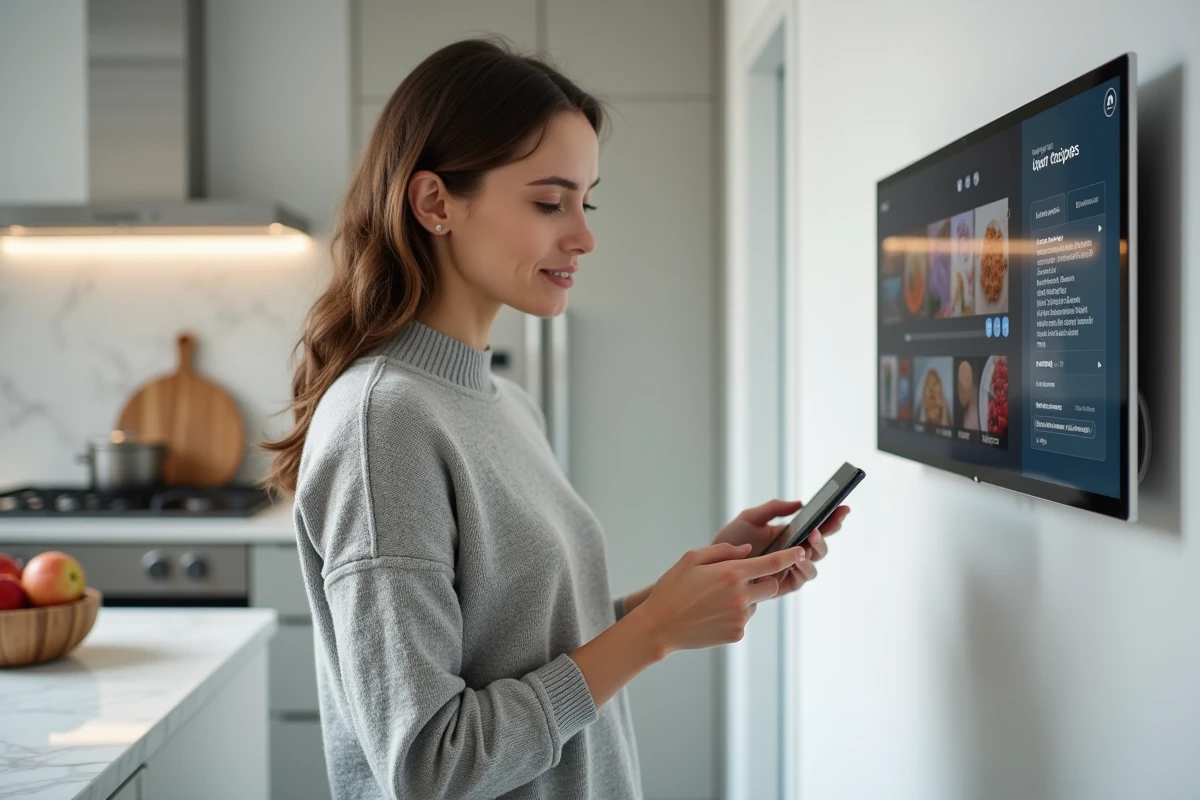
A connected thermostat that loses Wi-Fi connection in the middle of the night, a smart lock whose update blocks access to the home: the high-tech innovations that transform our daily lives are not just about their marketing promises. Their real value is measured by usage, in concrete situations where reliability and simplicity make a difference.
Setting up connected devices: the hidden time behind time savings
We buy a robot vacuum to save an hour a week. In practice, the first week is spent mapping the rooms, excluding fragile areas, calibrating the brush height, and updating the firmware.
An analysis from the American Time Use Survey (2024 report from the Bureau of Labor Statistics) shows that total domestic time has not significantly decreased since the massive adoption of connected devices. Tasks have been redistributed: less sweeping, more setup, model comparison, and managing breakdowns or updates.
This observation also applies to voice assistants. Setting up routines, connecting compatible bulbs, resolving conflicts between applications—all of this eats into the promised benefits. Feedback on this point varies depending on the complexity of the home setup, but the pattern remains the same: automation shifts the effort rather than eliminating it. This type of field analysis is regularly found on smartmag.fr, which details the real uses of consumer technologies.

Artificial intelligence and health: what the AI Act changes for users
Health AI assistants are multiplying: pre-diagnostic chatbots, symptom tracking apps, wearable sensors that continuously analyze heart rate. Their promise is clear: filter medical information to avoid unnecessary consultations or detect early warning signs.
The regulatory framework has caught up with this acceleration. The European regulation on artificial intelligence (AI Act), formally adopted by the European Parliament in March 2024, imposes new obligations on manufacturers of connected devices and voice assistants intended for the general public. The first provisions will gradually apply from 2025-2026.
Concrete obligations for consumer devices
- Clear information on AI usage: any device using an artificial intelligence model must explicitly inform the user that they are interacting with an automated system, not a human.
- Prohibition of certain manipulative practices, such as interfaces designed to push users to share health data without informed consent.
- Enhanced risk management requirements for devices classified as high-risk, particularly those handling biometric or medical data.
For a user, this means that the next generations of connected bracelets or tracking apps will need to clearly display their limitations. An AI health assistant does not replace a medical diagnosis, and regulations now require manufacturers to visibly remind users of this.
Home energy management: smart thermostats and meters put to the test
Adjusting heating remotely from your phone is the most marketed use case. In practice, the value of a smart thermostat largely depends on the quality of the home’s insulation and the type of heating installed.
In a recent apartment with a heat pump, the thermostat learns habits within a few days and adjusts the temperature room by room. In an older house with entry-level electric radiators, the gain remains marginal: the thermostat optimizes regulation, not system performance.
Three criteria before investing in a connected thermostat
- Compatibility with the existing heating system: some models only work with condensing boilers or underfloor heating, not with convectors.
- Stability of the Wi-Fi connection in the area where the unit is located: a network outage disables remote programming and forces a return to manual mode.
- Offline operation capability: models that retain local programming in case of internet failure prevent situations where heating gets stuck on an inappropriate setting.
Intelligent energy management also takes on a collective dimension with smart meters. These meters transmit consumption data in real-time, allowing users to identify peaks and adjust their habits. The benefit is real, provided users regularly check the dashboard, which the majority of equipped households do not do beyond the first few weeks.

Tech innovations and daily life: distinguishing gadgets from durable tools
Not all technological innovations have the same useful lifespan. A Bluetooth-connected padlock that requires a specific app, a monthly subscription, and a battery change every six months raises questions about the relationship between added complexity and the service provided.
In contrast, some advancements integrate seamlessly. Wireless charging technologies for mobile devices, for example, have reached a level of reliability where they are used without a second thought. Useful innovation is that which disappears into usage.
The most effective filter before adopting a new connected device remains operational: does this device still function properly when the Wi-Fi goes down, when the app is no longer maintained, when the manufacturer ceases operations? Products that answer yes to these three questions deserve attention. Others add a layer of technological dependence without a proportionate return.