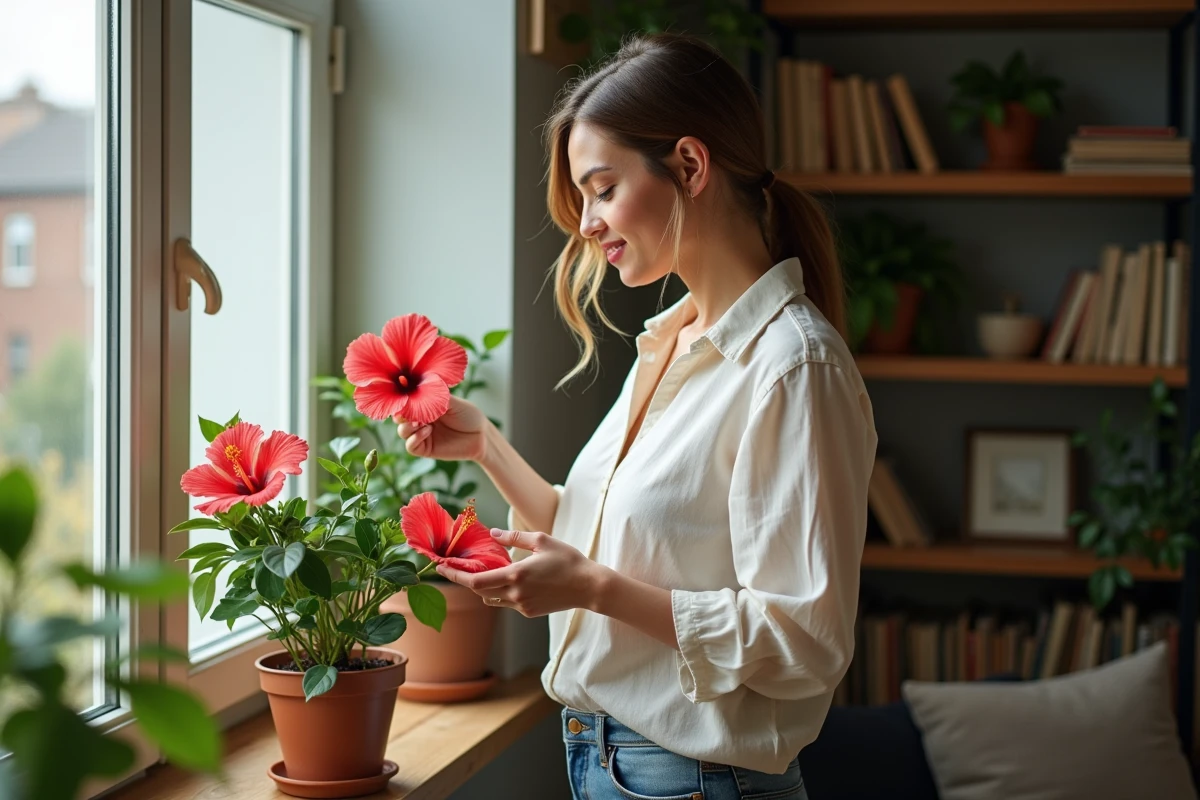
An indoor hibiscus does not always follow the classic seasonal rhythm. Excessive watering, often practiced during winter, compromises continuous blooming. An improperly dosed or poorly chosen fertilizer hinders bud formation. A stable ambient temperature, rarely maintained in heated apartments, causes unexpected dormancy cycles. However, a few precise adjustments can lead to flowers several times a year, far from the traditional gardening rules.
Why doesn’t the indoor hibiscus always bloom as hoped?
Getting an indoor hibiscus to bloom is often a challenge. Even the robust hibiscus rosa sinensis can keep its large corollas waiting if care slips on certain key points. Poorly managed watering, too generous in winter and too light during growth, quickly puts the plant in difficulty. Yellowing leaves, falling buds: each misstep deprives the hibiscus of any blooming buds.
The ambient temperature also plays a major role. Sudden variations, icy drafts, or a radiator too close: these details stress the plant. As for light, it must be abundant but filtered. Excess sunlight burns the leaves, while a lack of brightness delays or even prevents blooming. Other varieties like hibiscus syriacus or hibiscus perennial sometimes require extra monitoring as their needs differ regarding humidity or exposure. Those who venture into growing indoor hibiscus quickly develop the reflex to observe each leaf, each bud, to better anticipate the plant’s needs.
To maximize your chances, take the time to consult the recommendations from Votre Déco: they detail the importance of a well-aerated potting mix, well-drained, and actions adjusted according to each season. This is where success lies: suitable light, air that is neither too dry nor too humid, attention to all the little signs. A neglected detail, and the hibiscus remains silent. A precise action, and the plant starts to bloom without weakening.
The secrets of an ideal environment for continuous blooming
A healthy indoor hibiscus requires a location bathed in light but protected from direct sunlight. Near a window or a sliding glass door with moderate brightness, the plant displays its finest attire. During winter, a thoughtful addition of artificial lighting maintains the blooming rhythm when days shorten.
Another essential base is the substrate. A light, enriched, and well-drained potting mix avoids many disappointments. A pot equipped with a saucer and perforated to allow water to drain protects the roots from suffocation. Attention to humidity remains crucial: keep the soil moist without ever soaking it, and allow the surface to dry slightly before watering again.
The ideal indoor temperature ranges between 18 and 22°C, and humidity should not drop below the radiators. A simple trick is to place a tray filled with damp clay balls under the pot. Grouping other companion plants around the pot also creates a beneficial microclimate for the hibiscus.
Finally, hibiscus pruning regulates the plant’s vitality. By removing weak branches or old stems, vigor returns to young, productive shoots. The flower buds multiply, ready to open several times a year, even when the season is not supposed to allow it.
Simple daily tips for flowers all year round
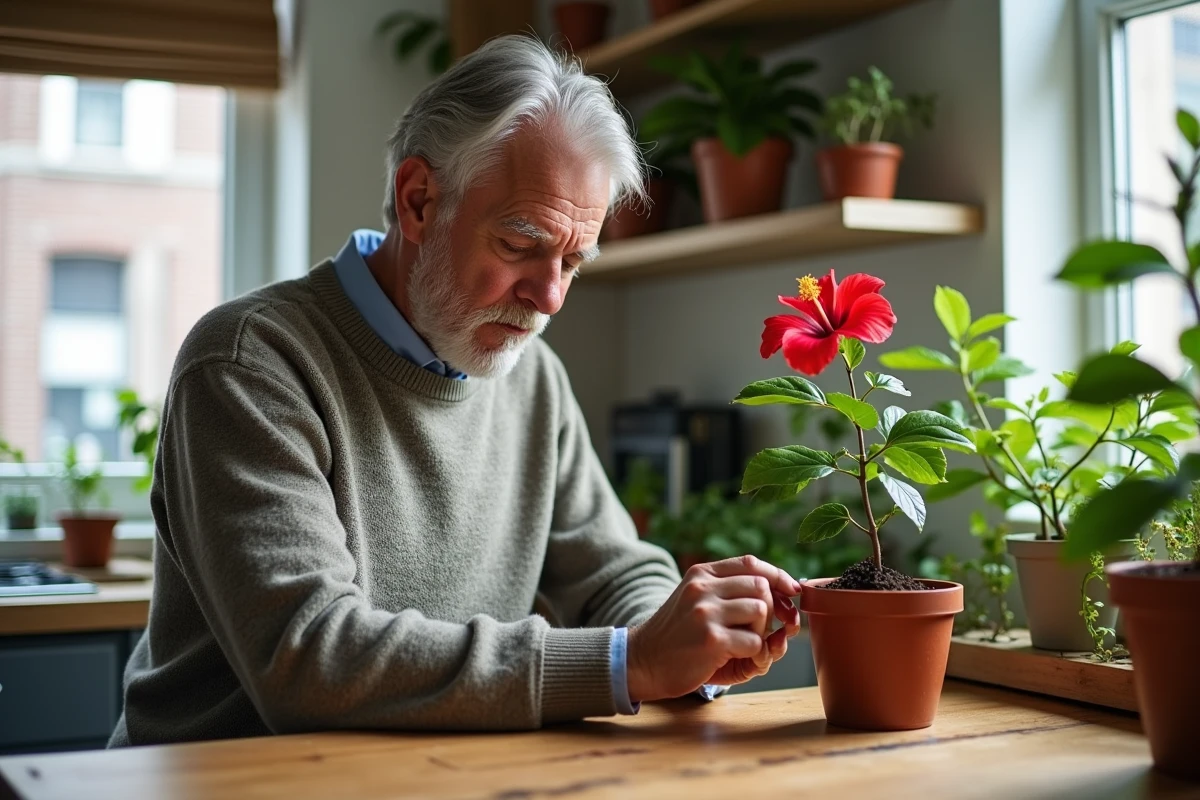
Adopting a few rituals encourages the famous Chinese rose to offer its flowers repeatedly. Regularly turning the pot remains a useful reflex: it helps distribute light and prevents the plant from leaning excessively.
Stay vigilant by observing the condition of the leaves and the formation of flower buds. A sudden drop in leaves or drying buds often reveals poorly adapted watering or an unwelcome draft. Using non-calcareous water at room temperature reduces the risk of imbalance and spots on the foliage.
For nutrition, a light organic fertilizer every two weeks during the growing season supports flowering without stressing the plant. Those interested in propagation can try simple cuttings: a stem cut at the beginning of summer, placed in water or soil, often ends up rooting to produce a new plant ready to bloom.
Daily actions for long-lasting blooming
Here are the reflexes that stimulate blooming and preserve the vitality of the hibiscus:
- Wipe the leaves with a damp cloth to limit dust accumulation.
- Regularly inspect the plant for potential pests like aphids or spider mites.
- Keep the pot away from direct heat sources in winter, while avoiding places exposed to sudden temperature changes.
Caring for an indoor hibiscus, whether it’s a perennial hibiscus, hibiscus rosa, or hibiscus moscheutos, requires a bit of effort and a lot of attention to detail. These simple actions, repeated week after week, transform a simple flowering pot into a colorful scene that invites itself into your living room, even when the sky remains gray outside.