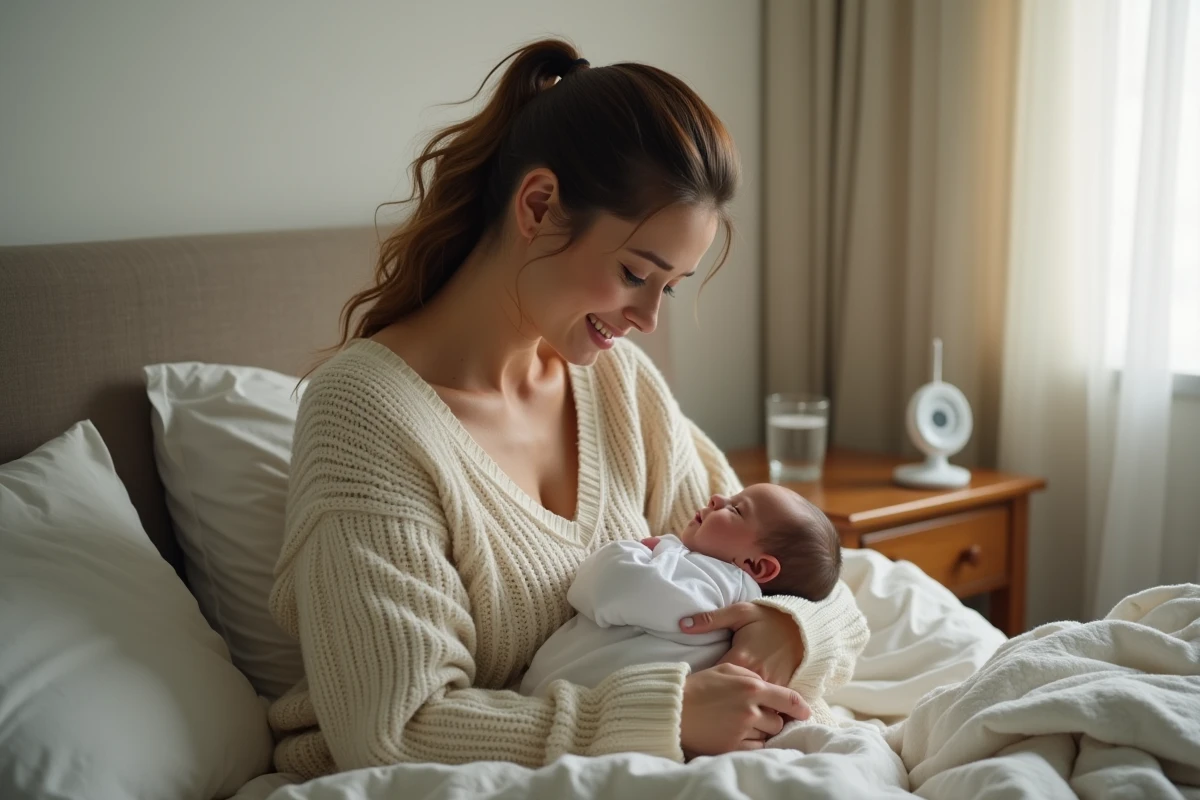
Parenting refers to the set of functions, psychological adjustments, and responsibilities that an adult mobilizes to meet a child’s needs. This definition, seemingly simple, conceals a less visible phenomenon: each parent arrives with a background inherited from their own childhood, that of their parents, and sometimes from earlier generations. These transgenerational transmissions shape educational reflexes long before the birth of the first child.
Transgenerational transmissions and parenting: what happens before birth
A transgenerational pattern is an emotional or behavioral mode of functioning that reproduces from one generation to another without the individuals involved being aware of it. It can involve an anxious relationship with separation, difficulty setting boundaries, or a tendency to minimize the child’s emotions.
These patterns do not pass through genes in the strict sense. They are transmitted through early imitation, family unspoken rules, and automatic reactions to stress. A parent who grew up in a household where anger was suppressed will tend to reproduce this silence, even after deciding to do otherwise.
Testimonies collected by the French Association of Adoptive Parents (AFPA) in a field survey published in March 2026 show that inherited anxious patterns repeat even among adoptive parents, meaning in the absence of a direct biological link. This observation leads to the consideration that relational environment takes precedence over genetics in the transmission of these automatism. The site onnemavaitpasditque.com also gathers accounts from parents facing these late realizations.

Blended families: why invisible transmissions amplify
In a blended family, multiple transgenerational lineages coexist under the same roof. Each adult brings their own unconscious legacies, and the children, depending on their age at the time of the recomposition, have already integrated the emotional codes of their first home.
This overlap creates concrete situations that so-called “traditional” families encounter less:
- A stepparent can trigger in the child a reaction of distrust inherited from an abandonment pattern experienced in the previous generation, without any of the adults understanding the origin of this resistance.
- Two adults who have each learned a different attachment style (one avoidant, the other enmeshed) find themselves negotiating contradictory educational rules, which rekindles their own childhood wounds.
- Children navigate between two homes with two sets of implicit norms, placing them in the position of “emotional translators” between incompatible family systems.
The family recomposition acts as an amplifier because it multiplies the number of transmissions at play and reduces the adaptation time. Parents did not grow up together; they did not build a shared history before the arrival of the children. The implicit foundation that allows “traditional” families to function on autopilot does not exist.
Collective strategies beyond individual therapy
In the face of these dynamics, purely individual approaches show their limits. Working alone on one’s patterns in a therapy session is not enough when the trigger lies in daily interactions with a partner, a stepson, or an ex-in-law.
Support groups for blended families
Several associations offer circles where blended parents share their concrete situations. The goal is not therapeutic in the clinical sense, but rather to name dynamics that each believes they are experiencing alone. Identifying a pattern in another parent often allows one to recognize their own.
Family constellation approaches
The AFPA survey mentions the growing use of family constellations to break repetitive cycles. This method, which stages the connections between family members (present or absent), allows for the visualization of invisible loyalties. It does not replace psychological follow-up, but it offers a collective framework that individual therapy does not provide.
Narrative parenting programs
In Sweden, national narrative parenting programs have been deployed since 2023. The principle: inviting parents to tell their own childhood story before working on their educational practices. According to the WHO’s evaluation of European family policies published in April 2026, these programs significantly reduce transgenerational symptoms in children compared to more individualistic approaches practiced in France.

Transgenerational assessment in PMI: what changes with the January 2025 decree
Since January 2025, Maternal and Child Protection services are required to include a systematic transgenerational assessment during post-natal consultations. This measure, stemming from decree no. 2024-1457 amending the Public Health Code, aims to early identify the transmission of traumas.
In practice, the PMI professional asks questions about the family history of both parents: history of early separations, violence, unresolved grief, forced migrations. The goal is to offer appropriate support before patterns settle into the parent-child relationship.
This approach is a step forward, but it remains limited if it is not part of a collective follow-up. A one-time assessment identifies a risk. It does not change the family dynamics on a daily basis, especially in blended configurations where interactions between adults are already complex.
Parenting is not just a set of educational techniques to apply. The most tenacious reflexes come from afar, and they resist precisely because they are invisible. Collective tools (support groups, constellations, narrative programs) complement individual work by acting where it falters: in the living relationship, between people who each carry a different story.