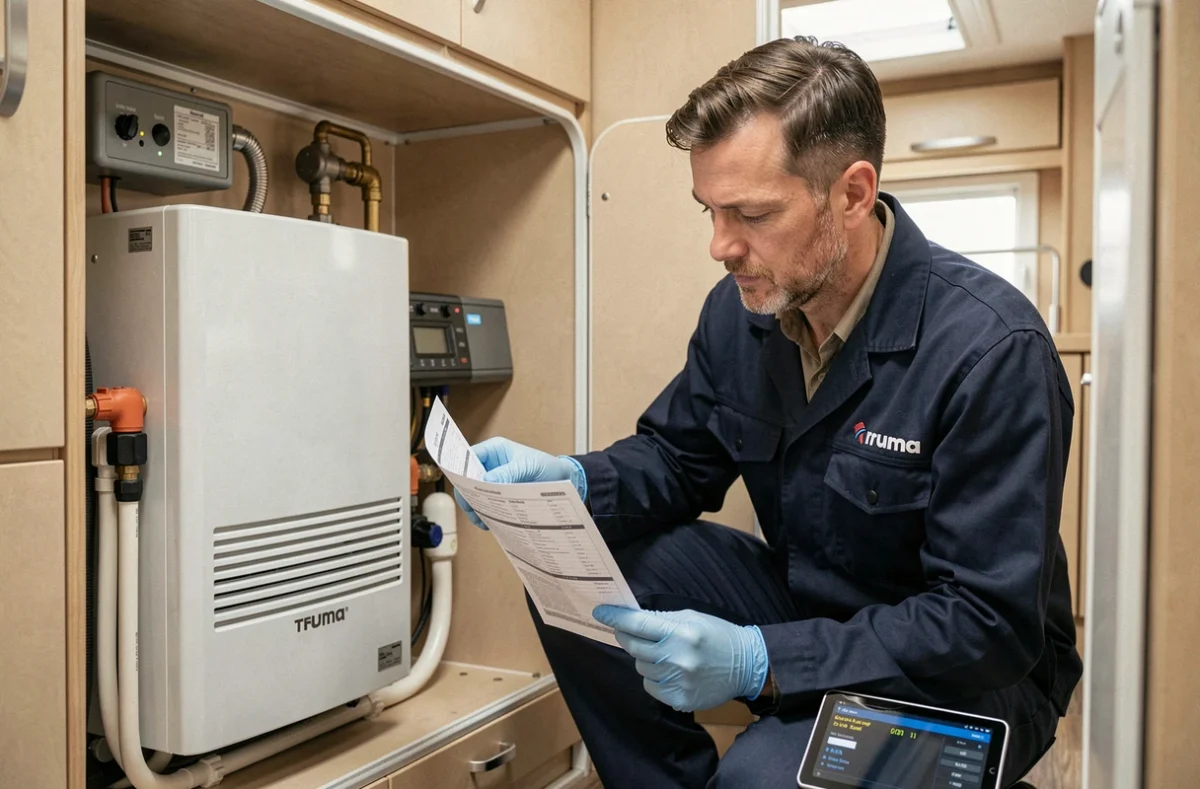
Truma heaters equip a large portion of the motorhomes and caravans on the road. When an error code appears on the control panel, the temptation is strong to look for a universal table to identify the problem. The reality of Truma diagnostics is more fragmented: the same code can refer to different causes depending on the model, the generation of the device, and the associated control panel.
Truma Error Codes: Why a Unique Table is Not Enough
The first reflex when faced with a code displayed on a CP Plus or a digital panel is to consult an online list. The problem is that the codes change meaning depending on the model and suffix. A Combi 4 gas, a Combi Diesel, and a VarioHeat do not share the same code reference. Variants in H, for example, may indicate defects specific to one generation of device that do not exist on another.
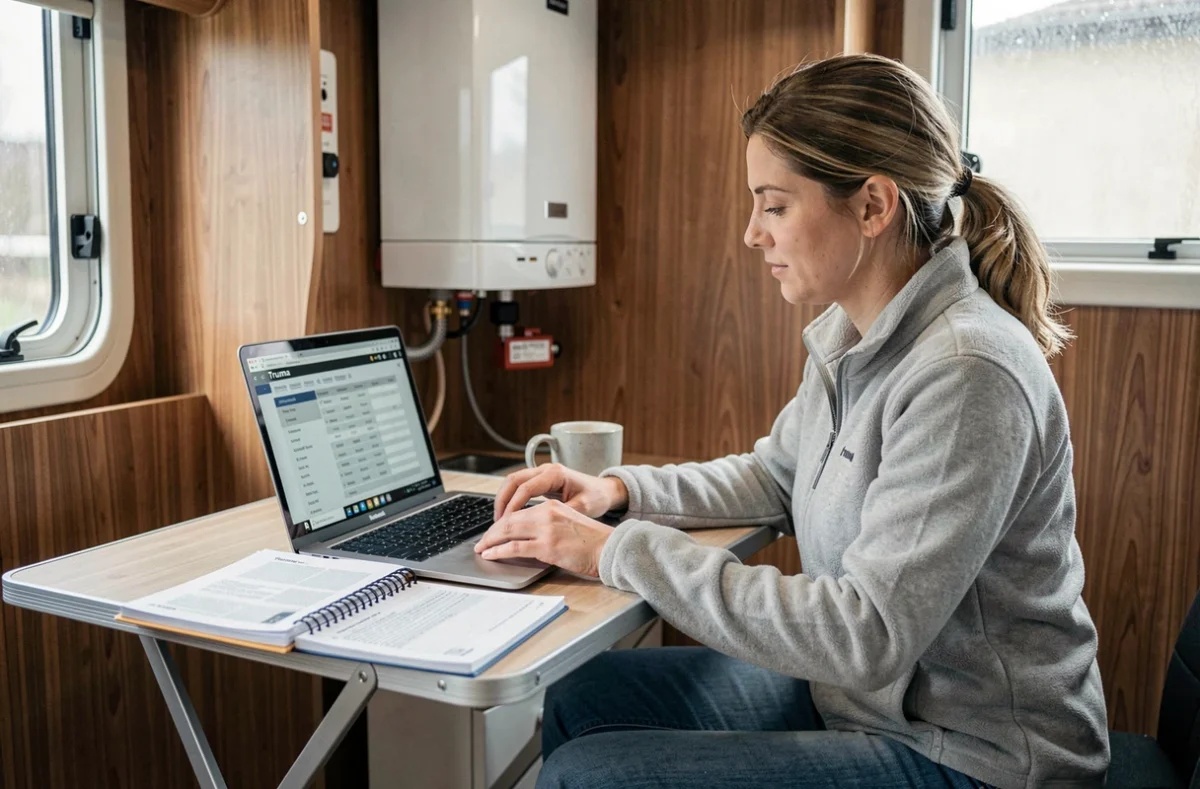
The technical document provided with the device remains the only reliable source for interpreting a code. Lists compiled by forums or third-party sites sometimes mix codes from different manuals, which can lead to a wrong diagnosis. To consult the list of Truma fault codes with distinctions by model, one must systematically cross-reference the information with the exact reference of their device and control panel.
The letter that precedes or follows the code number is not decorative. A W indicates a warning, while an E indicates a blocking error. This distinction determines the course of action: a warning may disappear after correcting a parameter, while a blocking error often requires intervention on the equipment or a reset.
12 V Voltage and Power Codes: The Trap of Idle Testing
Among the most frequent codes, those related to electrical power represent a significant portion of reported failures. The difficulty lies in the measurement method. A battery may show a correct voltage at rest and then drop sharply under load, when the fan or water pump starts up.
Some recent code tables associate code E160H with a voltage below a threshold of around ten volts, and code 44 with a slightly higher threshold. These values should not be transposed from one model to another without verification in the corresponding manual. Field feedback varies on this point: users report triggering power codes while their multimeter shows normal voltage, precisely because the measurement was taken off-load.
Check the Voltage Under Load of the Truma Heater
The method involves measuring the voltage at the terminals of the auxiliary battery while the heater is operating, not before or after. If the voltage drops below the critical threshold at that moment, the error code is consistent, and the problem lies with the battery or wiring, not the heater.
- Connect a multimeter to the auxiliary battery and start the heater in active heating mode (fan and pump running)
- Observe if the voltage drops by more than one volt compared to the resting value, which indicates a weak battery or insufficient cable gauge
- Check the connections and fuses on the 12 V circuit between the battery and the Truma device, as parasitic resistance in the wiring can cause localized voltage drops
Truma Overheating Codes: Inspect Ducts Before Replacing a Sensor
A code related to excessive hot air temperature does not automatically point to a faulty sensor. Practical diagnosis begins with inspecting the ducts and grilles, not by replacing a probe. A blocked air intake, an outlet grille obstructed by furniture or a curtain, a fan that no longer delivers enough airflow: these simple mechanical causes account for the majority of overheating cases.
The reflex to order a temperature sensor as a first step is costly and often unnecessary. Cleaning the hot air ducts, checking that the air outlets are not partially closed, and visually inspecting the fan can eliminate the most likely causes before considering a part replacement.
Resetting the Truma Heater: When the Reset Worsens the Situation
The reset is the most documented procedure on motorhome forums. It effectively resolves certain isolated error codes, particularly after a gas cut-off or a one-time ignition failure. However, an excessive number of resets can trigger a temporary lockout.
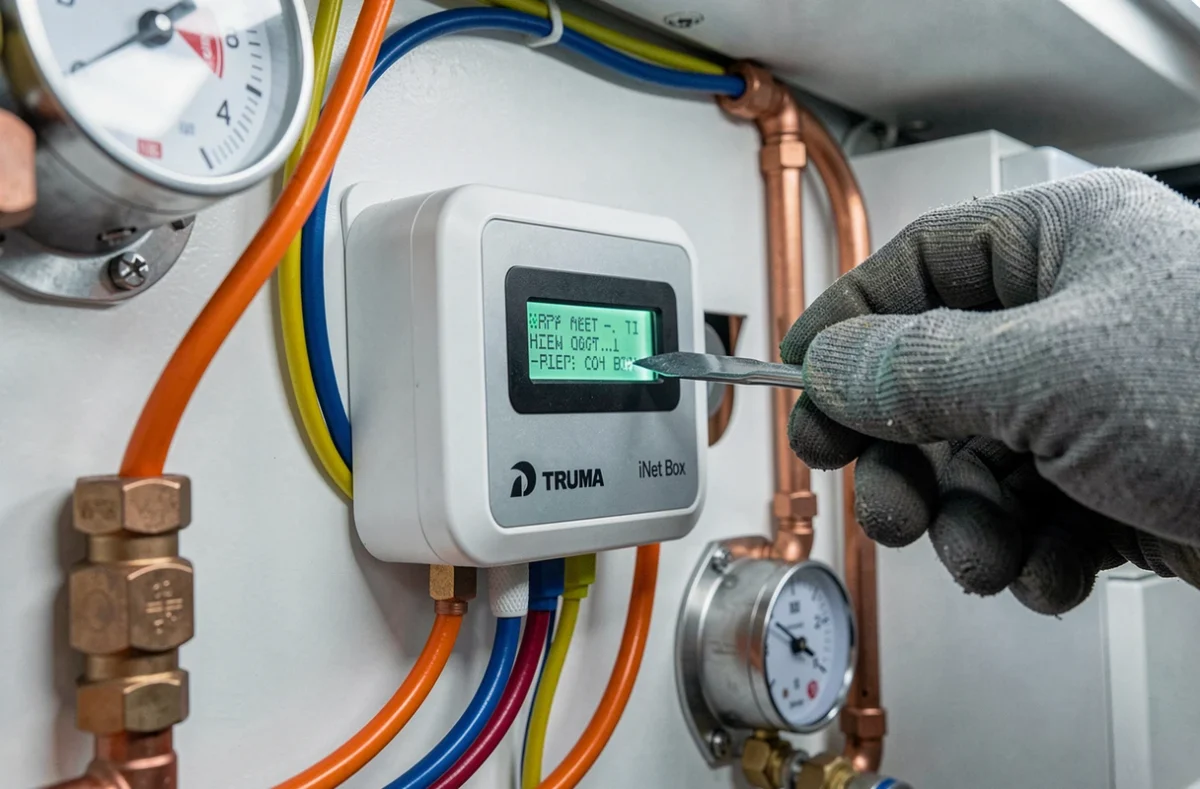
Code E607H is described in some documentation as a lockout related to repeated reset attempts. The device interprets these successive resets as a sign of a persistent fault and goes into safety mode. In this case, the only solution is to wait for the unlocking delay set by the system or to call in a certified Truma technician.
What the Reset Can and Cannot Resolve
- A reset is relevant after a one-time ignition failure (empty gas bottle replaced, accidental power cut)
- A reset does not correct a recurring hardware fault: if the code reappears after two resets, the problem lies elsewhere
- Multiplying reset attempts without correcting the underlying cause risks triggering an additional safety lockout
The distinction between W (warning) and E (blocking error) guides the decision: a warning that persists after a reset deserves thorough inspection, while a blocking error that returns after two attempts requires professional diagnosis. The available data does not allow us to conclude that a “cold” reset (total power cut for several minutes) is more effective than a reset via the control panel, although this method is widely recommended by users.
Diagnosing a Truma heater relies on three preliminary checks that eliminate the majority of false failures: identifying the exact model and corresponding manual, measuring the voltage under load, and physically inspecting the air ducts. The displayed code is a starting point, not a verdict. Without these steps, even the most comprehensive code list leads only to assumptions.