
A lease is terminated by a judge, but the occupant remains in the property. The landlord demands an occupancy indemnity, along with charges. The statement includes management fees, service charge advances and even property tax. What does the occupant actually have to pay, and on what grounds can they challenge the charges?
Recoverable charges and occupancy indemnity: what the judge distinguishes
An occupancy indemnity is not rent. It compensates the landlord for being deprived of the use of the property. In practice, however, courts often set it at an amount equal to the last rent payment, plus recoverable charges.
A ruling by the Angers Judicial Court on 19 October 2026 illustrates how this works. When the termination clause takes effect, the indemnity is equal to the rent and charges that would have been due if the lease had continued. The occupant therefore pays the same service charge advances as a tenant under a current lease.
The distinction lies in which charges are included. Only charges classified as recoverable may be billed. These are defined by the Act of 6 July 1989 and the Decree of 26 August 1987.
In a ruling dated 3 November 2026, the Brive-la-Gaillarde Judicial Court excluded management fees related to failed direct debits, noting that these fees are not included in the list of recoverable charges. For more information about how occupancy indemnities work on 123 Net Immo, see its detailed explanation from the landlord’s perspective.
Anything not listed in the 1987 decree is excluded from the statement. Bank fees, property management fees, structural repairs and property tax are not recoverable charges.
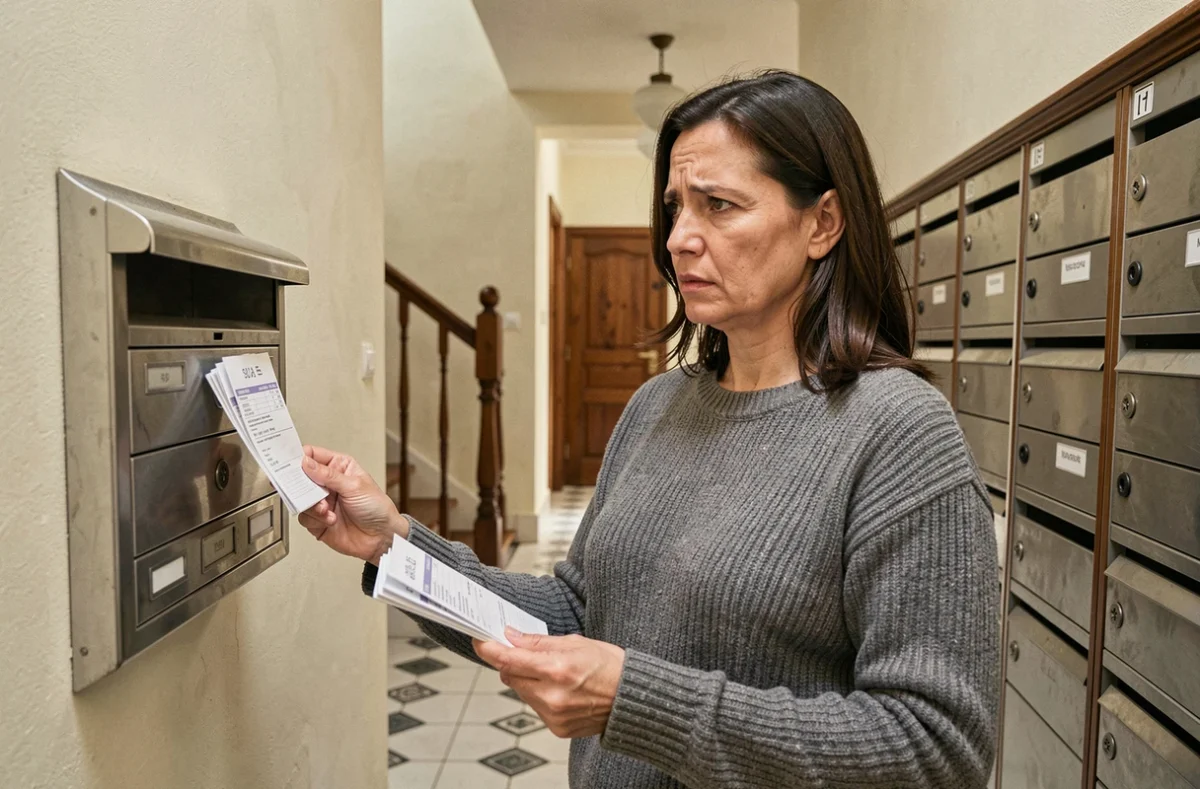
Challenging an occupancy indemnity statement that mixes charges with the landlord’s expenses
Have you received an occupancy indemnity statement with unclear line items? Here’s how to check whether it is valid.
Identify each item on the statement
First, separate the expenses in the document you received into three categories:
- Recoverable charges: maintenance of common areas, cold water, communal heating, rubbish collection, maintenance of green spaces and electricity for common areas. These are the only charges the occupant may have to pay.
- The landlord’s management fees: property manager fees charged on the landlord’s behalf, reminder fees and failed direct debit fees. These are the landlord’s responsibility and are not recoverable.
- Property preservation expenses: façade renovations, replacement of a communal boiler and property tax. These are the landlord’s responsibility (or that of the co-owners in the case of jointly owned property).
If the statement combines all three categories into a single amount, the occupant is entitled to request an itemised breakdown.
Request supporting documents
In a decision dated 29 October 2026, the Aix-en-Provence Court of Appeal distinguished between the monthly indemnity and substantiated recoverable charges. The wording of the court decision and the documents submitted by the landlord matter just as much as the amount set.
In practical terms, the landlord must provide supporting documents for each recoverable charge. Without a statement of charges from the property manager or an individual breakdown, the item can be challenged before the judge. The absence of supporting documents does not mean the charge does not exist, but it does prevent the landlord from demanding payment.
Submit your challenge
A registered letter to the landlord (or their representative) is enough as a first step. It should list the disputed items and request the missing documents. If the landlord does not respond or continues to claim non-recoverable charges, the protection litigation judge can be asked to resolve the dispute.
Jointly owned property: usage charges and preservation expenses
The question of charges takes a different turn when a property is jointly owned by several people, for example following a divorce or inheritance.
The Court of Cassation applies an allocation rule based on the nature of the expense. Charges related to personal use are the responsibility of the co-owner who occupies the property. These include routine maintenance, water, communal heating and condominium charges related to day-to-day occupancy.
By contrast, expenses for preserving the property, such as property tax or major works, are the responsibility of all the co-owners. The co-owner who occupies the property cannot be required to bear these costs alone, even if they live there. Case law, including a decision dated 12 December 2007, classifies property tax as a preservation expense.
In practice, the occupancy indemnity paid by the co-owner who occupies the property to the other co-owners does not automatically cover property tax or structural work. These items are accounted for separately as part of the joint ownership.
Occupancy indemnity and charges: summary table by situation
| Situation | Charges payable by the occupant | Excluded charges |
|---|---|---|
| Terminated residential lease | Recoverable charges (1987 decree) | Management fees, property tax, works |
| Joint ownership (divorce, inheritance) | Personal usage charges (water, heating, routine maintenance) | Property tax, major works (preservation expenses) |
| Occupancy without a lease or legal title | Set by the judge on a case-by-case basis | Depends on the court decision |
This table is a simplified guide, but each situation depends on the court decision or the agreement between the parties. The amount and scope of the charges must be explicitly stated in the judgment or agreement.
The distinction between expenses related to using the property and those related to preserving it remains the key criterion, whether the situation involves a tenancy or joint ownership. A statement that fails to respect this distinction can be challenged, provided you act promptly and request supporting documents before anything else.