
The black marks left by tires on a concrete surface are not just superficial stains. They result from a transfer of material: carbon black and plasticizers contained in the rubber migrate to the porous surface of the concrete due to heat and friction. Understanding this mechanism allows for the selection of the right cleaning method without damaging the slab.
Rubber Transfer on Concrete: Why Marks Resist Simple Washing
A tire in contact with concrete deposits a film of organic compounds, primarily carbon black linked to oils and plasticizers. These substances penetrate the open pores of the concrete, making them resistant to a regular water jet.
Soft rubber tires leave more marks on concrete. Sports tires (high performance) and winter tires contain richer additives that migrate more easily, especially when they are new. The phenomenon intensifies after a drive where the rubber has heated up.
The age of the slab also plays a direct role. Recent concrete, with its fragile surface laitance, absorbs these residues more deeply than concrete that has hardened for several months. Before any intervention, it is important to know how to remove tire marks from concrete by adapting the approach to the maturity level of the slab.
Baking Soda and Degreaser Cleaning: The Gentle Method for Domestic Concrete
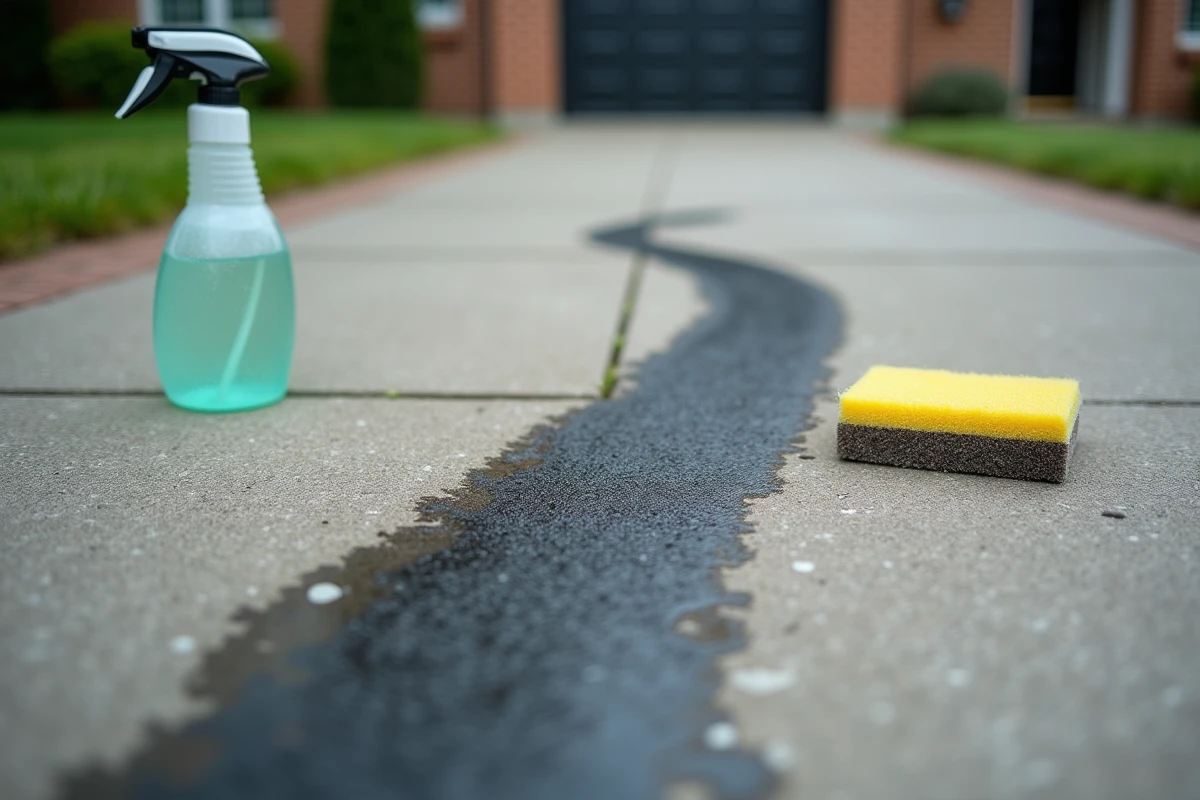
For a residential garage or driveway, the first attempt should always be the least aggressive. Baking soda combined with an alkaline degreaser yields clear results on recent marks without attacking the surface.
Surface Preparation Before Cleaning
Carefully sweep the floor to remove gravel and dust. Lightly moisten the affected area with clear water. This step prevents the cleaning product from drying too quickly and being absorbed before it has acted on the mark.
Application and Dwell Time
- Sprinkle a thick layer of baking soda directly on the black mark, then spray a household degreaser on top to form a paste
- Let it sit for about twenty minutes, allowing the alkaline mixture to dissolve the greasy residues from the tire
- Scrub with a stiff-bristled brush (not metal, which scratches the concrete) in circular motions, then rinse with a jet of water
If the mark persists after the first pass, repeat the operation. Two successive applications are better than a single pass with a more aggressive product.
Pressure Washer on Tire Marks: Effectiveness and Limits
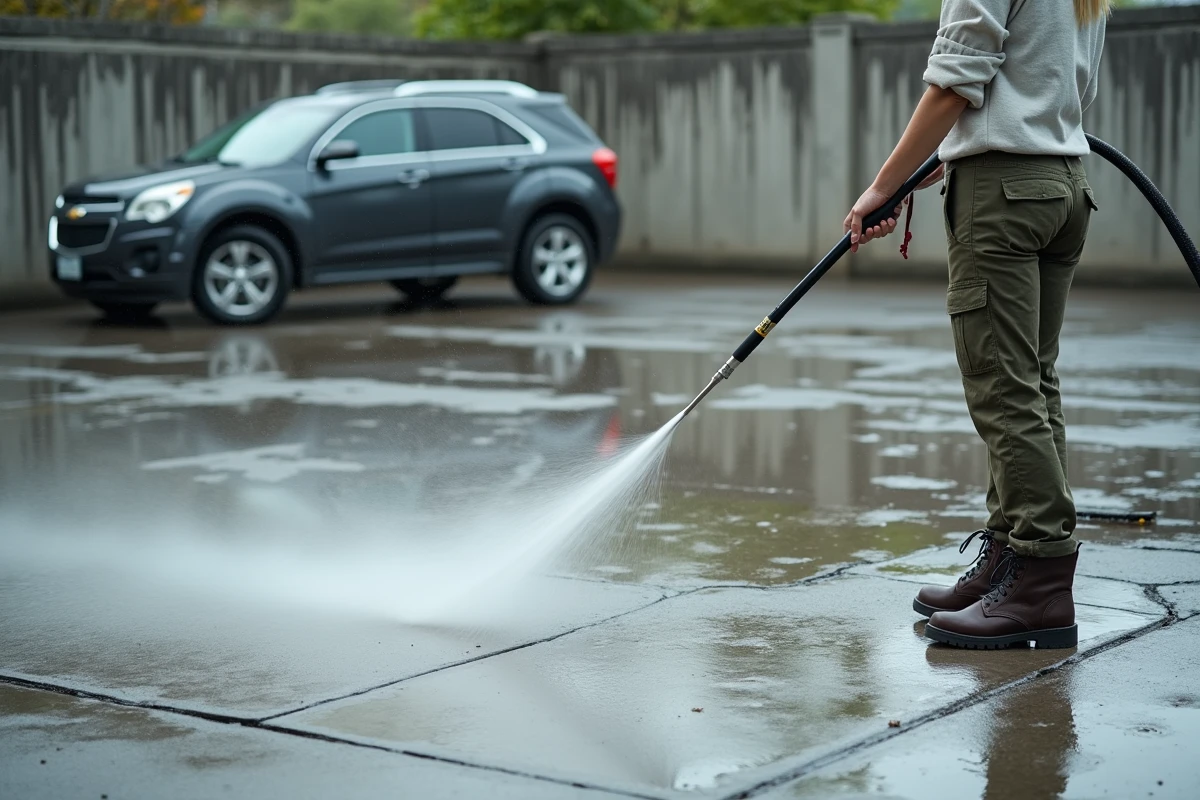
High-pressure cleaning works well on superficial marks, where the carbon black has not penetrated deeply into the pores. The water pressure mechanically removes the rubber film without the need for a chemical product.
On old and well-hardened concrete, this method is often sufficient. The jet must remain in constant motion to avoid digging into the surface in the same spot.
On new or recently poured concrete, high pressure poses a real risk. The surface laitance, still soft, can be stripped away by the jet, creating whitish or eroded areas that are more unsightly than the tire mark itself. For a slab less than a few months old, it is better to stick to the gentle method described above.
Solvents on Concrete: The Discoloration Trap
Acetone, white spirit, or paint thinners are often recommended in online tutorials. These solvents effectively dissolve rubber residues, but they have a disadvantage that few guides mention.
Strong solvents can irreversibly discolor concrete. Acetone, in particular, also dissolves the binders present in the upper layers of the slab. The result: the black mark disappears, but a lighter or yellowish area appears in its place.
If resorting to a solvent remains the only option (very old, deeply embedded mark), a few precautions can minimize damage:
- Test the product on a discreet area of the floor, at the periphery, to check the reaction of the concrete
- Apply the solvent with a cloth directly on the mark only, without spilling onto the clean concrete around
- Rinse thoroughly with clear water after a few minutes of contact, without allowing the product to dry on the surface
- Ventilate the garage during and after the operation, as solvent vapors are harmful in enclosed spaces
Preventing Tire Marks on Concrete Garage Floors
Regular cleaning remains the best strategy. A mark treated within days of its appearance comes off much more easily than a mark that has been embedded for months.
Applying a surface water repellent or a pore-sealing treatment on a clean, dry slab significantly reduces the penetration of rubber residues. The treated concrete remains porous to water vapor, but oils and carbon black slide on the surface instead of infiltrating. The next cleaning can then be done with just a water jet.
Placing a floor mat or tarp under the wheels in regular parking spots is a radical solution. This approach eliminates the problem at the source, without the need for products or frequent cleaning.
The choice of method primarily depends on the age of the concrete and the age of the mark. An alkaline degreaser with baking soda handles most common cases. High pressure completes the job on mature slabs. Solvents remain a last resort, to be used on a previously tested surface, never on new concrete.