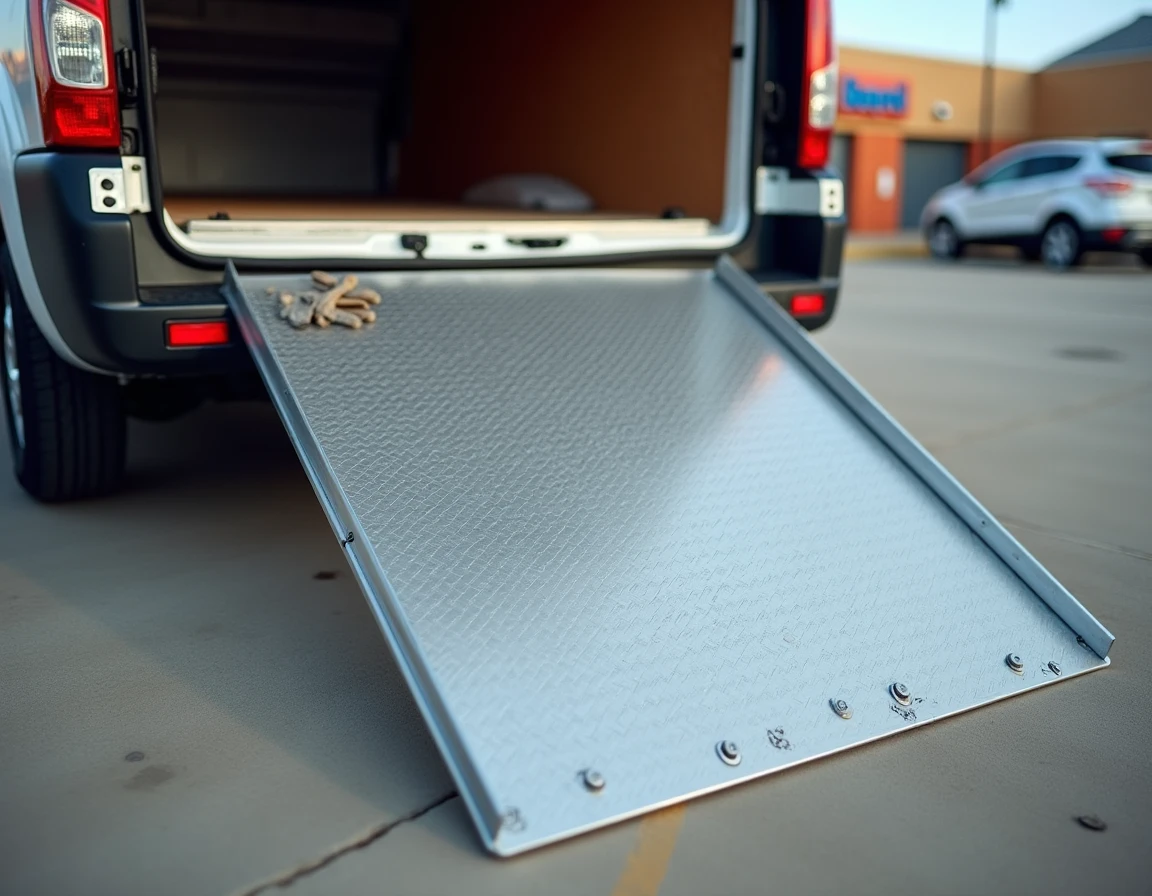
The loading ramp sold at Brico Dépôt made of galvanized steel remains the most accessible entry-level product on the French market for loading an ATV, a riding mower, or a tiller onto a trailer. Its price per pair is unbeatable, but user feedback reveals limitations that the price alone does not allow one to anticipate.
Galvanization and mechanical strength: what entry-level steel is worth
Entry-level galvanized steel ramps share a structural flaw: the zinc coating is too thin to withstand prolonged outdoor storage. On specialized ATV and trailer forums, users report rust appearing as early as the second season when the ramp is left under a tarp or exposed to the elements.
The problem is not limited to aesthetics. Corrosion primarily attacks the hinges and folding points, areas subjected to both mechanical stress and water stagnation. An oxidized hinge loses its mobility, complicating unfolding and weakening the connection between the two sections.
We also observe a warping phenomenon of the sheet metal after a few dozen heavy loads. On a model with low edges, the warping reduces the support surface and shifts the load towards the center, exacerbating the deformation. A vicious cycle that extruded aluminum ramps do not experience, thanks to the superior rigidity of the U or omega profile.
For those looking to consult reviews on the Brico Dépôt loading ramp before making a decision, feedback converges on this point: entry-level galvanized steel is suitable for occasional and sheltered use, not for regular outdoor operation.
Galvanized steel ramp vs aluminum ramp: technical comparison
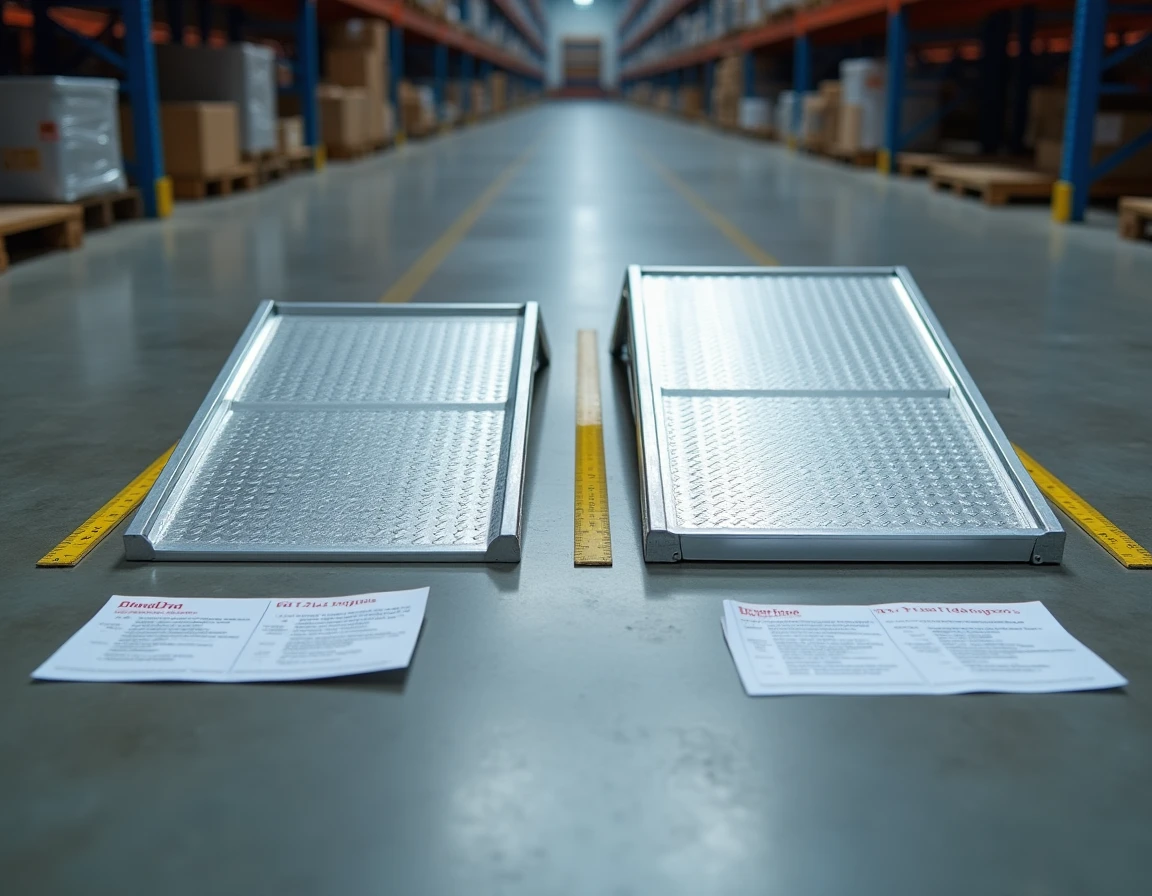
The choice of material determines the lifespan, the weight handled when empty, and the behavior under load. We recommend thinking in terms of cost per year of use rather than just purchase price.
| Criterion | Galvanized Steel (Brico Dépôt) | Extruded Aluminum (specialist) |
|---|---|---|
| Weight per ramp | High (requires two people to handle) | Significantly lighter (can be handled alone) |
| Corrosion resistance | Average, rapid degradation outdoors | Excellent, no surface treatment needed |
| Stiffness under load | Visible bending on loads near the limit | Rigid profile, almost no deformation |
| Foldability / storage | Central hinge, reduced bulk | Fixed or sliding models, bulkier |
| Price per pair | Very low | Two to four times higher |
Aluminum remains the reference material for regular use. Galvanized steel is justified only for occasional loadings, with dry storage between each use.
Declared load capacity and actual capacity
The displayed capacity corresponds to a static load evenly distributed. In practice, an ATV or a riding mower concentrates its weight on two narrow tire tracks, which stresses the ramp asymmetrically.
We recommend maintaining a margin of at least one third compared to the declared capacity. A ramp rated for a few hundred kilos should not receive a machine whose total weight exceeds two-thirds of that value.
Usable width and edges: criteria often overlooked by general guides
Usable width is the most underestimated parameter when choosing a loading ramp. Most entry-level models offer a width of around twenty centimeters, sufficient for a mower wheel but too narrow for a wide ATV tire or a wheelchair.
Ramps with side edges provide additional safety by preventing the wheel from deviating. This detail becomes crucial on steep slopes or when loading is done alone, without anyone to guide the machine.
- For an ATV or SSV, prefer a usable width of at least 25 cm with edges a few centimeters high
- For a riding mower, standard width is sufficient as long as you stay well aligned
- For accessibility use (wheelchair, walker, hand truck), aim for a wide ramp without protruding edges, with a continuous non-slip surface
The accessibility market is, by the way, a blind spot in the Brico Dépôt aisle. Ramps designed for access to homes or TPMR vans require stability and flatness that foldable steel models do not guarantee.
Safety and installation: checkpoints before each use
A poorly installed loading ramp is the leading cause of accidents when loading machines onto trailers. The attachment device to the tailgate or platform deserves systematic inspection.
- Check that the support hooks are properly engaged on the edge of the platform, with no lateral play
- Inspect the condition of the hinges on foldable models: any abnormal resistance when unfolding indicates internal corrosion
- Ensure that the non-slip surface (chequered plate, grid, or applied coating) is not worn or covered in dried mud
- Position the trailer on flat ground and chock the wheels before placing the ramps
A thirty-second visual check before each loading is enough to eliminate most risks. On galvanized steel models, paying particular attention to the folding areas helps avoid unpleasant surprises.
Maintenance to extend lifespan
Rinse the ramps with clean water after each use in muddy conditions, dry before storage. A coat of grease or anti-corrosion product on the hinges after each season significantly slows down oxidation. These simple actions double the lifespan of an entry-level steel model.
The choice between a Brico Dépôt ramp and a specialized model boils down to a simple equation: frequency of use and storage conditions. For a few loadings per year in a dry garage, galvanized steel does its job. Beyond a dozen annual uses or outdoor storage, aluminum becomes the clear choice.