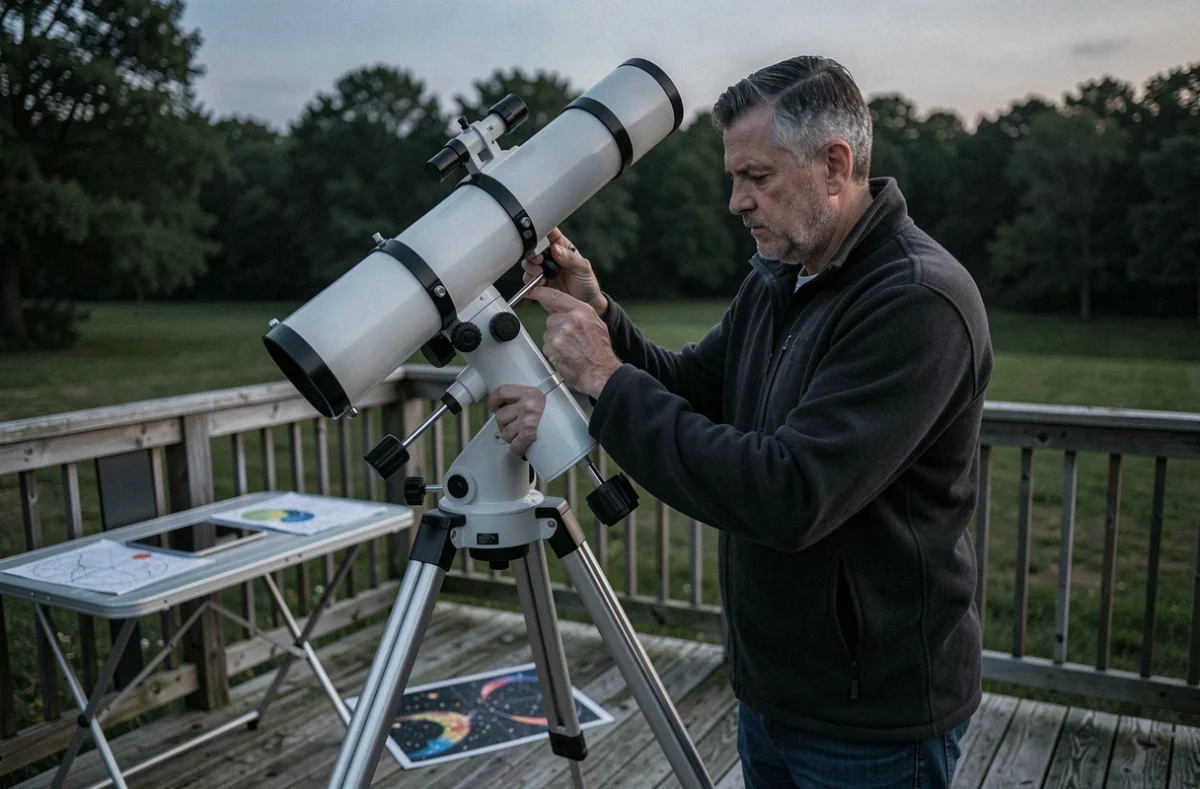
A quality optical tube, a motorized equatorial mount, a cooled CCD camera, narrowband filters: the setup of a serious amateur astronomer represents several thousand euros. The question of insuring astronomical equipment is not a matter of comfort; it conditions the ability to resume activities after a loss.
Exclusion of professional-use equipment in home insurance
A multi-risk home insurance covers private movable property located at home. As soon as astronomical equipment is used for a paid activity, this coverage may be denied or reduced in the event of a loss.
The profiles concerned are more numerous than one might think: astrophotographers selling their images, workshop facilitators charging for observation sessions, micro-entrepreneurs offering astronomical evenings. Equipment related to a professional activity requires a specific declaration, or even a separate professional multi-risk policy. The insurer considers that the risk of intensive use and frequent transport alters the probability of a loss.
We recommend checking the “professional goods” clause of your home insurance contract. Even occasional use generating income may be enough to trigger the exclusion. The status of micro-entrepreneur in the culture and leisure sector imposes specific obligations regarding coverage of premises and equipment, even when this premises is the personal home.
Before finding yourself in this situation, it is advisable to consult the Astronomic website to evaluate the options suitable for mixed or purely amateur use.
Coverage for all locations and conditions outside the home
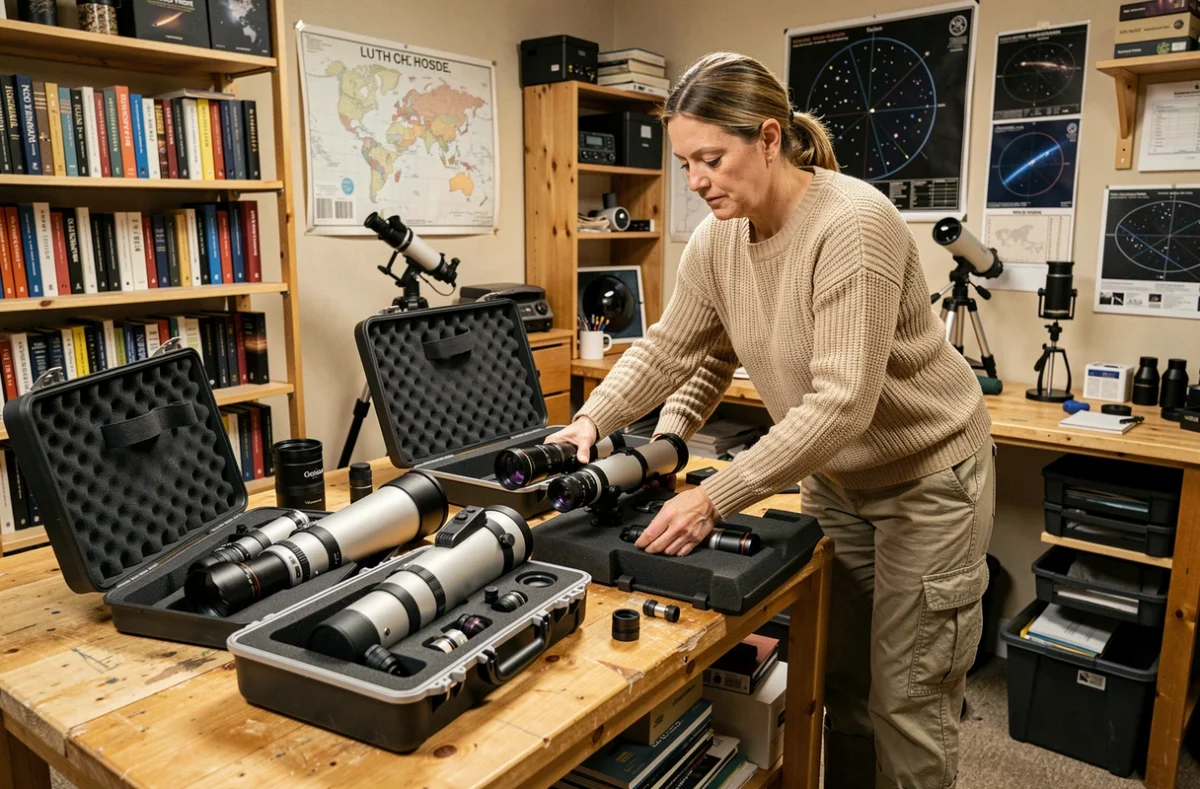
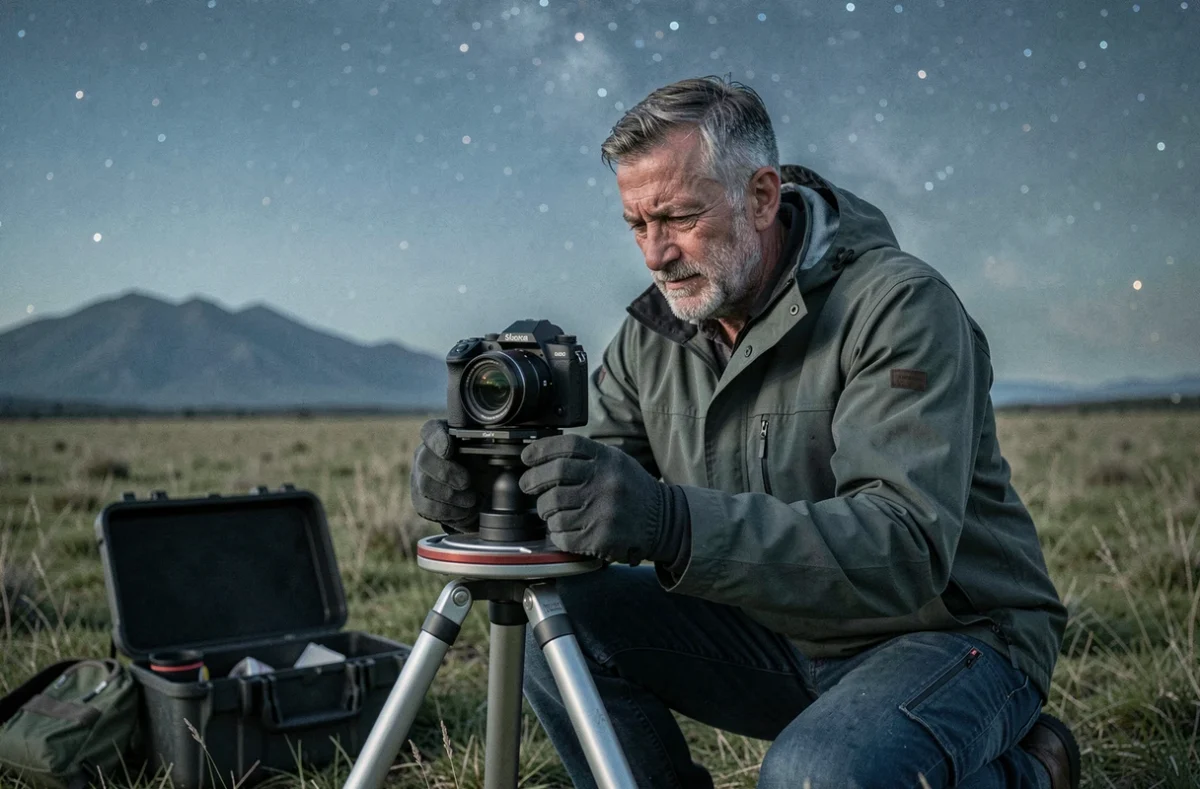
Home contents coverage does not protect a telescope set up at an observation site. This is the blind spot of most standard home insurance contracts. A 300 mm Newtonian placed in a field in the countryside, an APO refractor in the trunk of a vehicle parked in a lot, a complete setup in a community hall during an event: none of these cases are covered by default.
The so-called “all locations” guarantee is a distinct contractual extension. It covers equipment transported and used outside the home, but its conditions vary by insurer.
Theft in a vehicle: strict conditions
The theft of astronomical equipment from a vehicle remains one of the most frequent claims when traveling to isolated observation sites. Insurers generally impose cumulative conditions:
- The vehicle must be locked with a characterized break-in (broken window, forced lock confirmed)
- The equipment must not be visible from outside the vehicle
- The claim must be reported within a short time after the theft is discovered
An optical tube placed on the back seat, visible through the window, will be considered negligence. The equipment must be stored in a closed trunk and ideally in an opaque case.
Civil liability at public events
An amateur astronomer setting up their equipment at a public event, a Night of the Stars, or an association gathering engages their civil liability. If a passerby is injured by hitting a tripod or if a child knocks over an optical tube, the question of coverage arises immediately.
The civil liability included in a home insurance contract covers damages caused to others in the context of private life, but using the equipment in an associative or event context may require an extension. We observe that astronomy clubs increasingly require individual civil liability certificates to participate in group outings.
Proof of value and inventory of astronomical equipment
Reporting a claim without being able to prove the value of the stolen or damaged equipment significantly reduces compensation. The insurer requires supporting documents: purchase invoices, timestamped photos, serial numbers.
Astronomical equipment poses a particular problem. Purchases are often made on specialized foreign websites, in the second-hand market between individuals, or in lots at astronomy fairs. Invoices are often missing, amounts are sometimes undervalued, and accessories (eyepieces, adapter rings, filters) are rarely documented individually.
Creating an inventory acceptable to the insurer
We recommend creating a permanent file that includes the following elements:
- Original purchase invoices or screenshots of order confirmations with amount and date
- Photos of the equipment with visible serial numbers, timestamped (EXIF metadata is authoritative)
- Written estimate for second-hand equipment, ideally from a specialized reseller
- Detailed list of accessories with estimated unit value
A photographed inventory stored outside the home (cloud, safe deposit box) remains accessible even in the event of burglary or fire. The burden of proof rests with the insured: without supporting documents, compensation will be based on a flat rate often much lower than the actual value.
Astronomical equipment insurance contract: guarantees to compare
A specific contract for astronomical equipment is not limited to theft coverage. Accidental damages represent a significant portion of claims: dropping an eyepiece, tipping over a poorly balanced mount, thermal shock on a mirror, moisture infiltration in a camera’s electronics.
The accidental damage coverage covers handling errors, which neither home insurance nor manufacturer guarantees cover. This is a determining selection criterion for astrophotography setups, where the value of the camera and filters often exceeds that of the optical tube.
Also check the method of compensation: replacement value, replacement cost, or depreciation deducted value. For quality optical equipment, the depreciation applied by some insurers can significantly reduce compensation from the second year onward.
Protecting astronomical equipment is not limited to a signed and forgotten contract. It requires an annual review of coverage limits, an update of the inventory with each acquisition, and a review of exclusion clauses before each season of nomadic observation.